
What is SEO ?
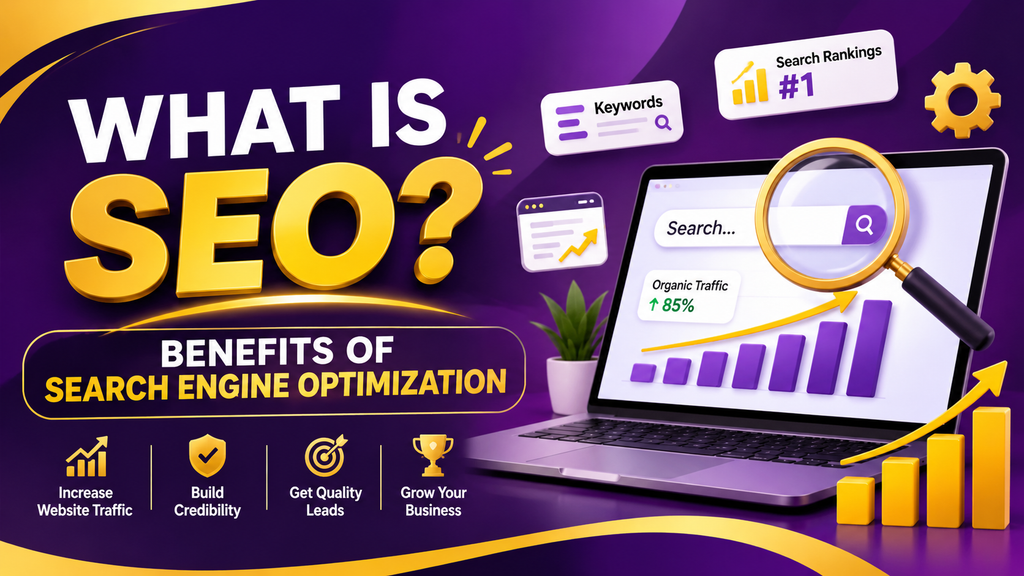
SEO means Search Engine Optimization. SEO is the process of making a websites content, technical structure and overall performance so that the website becomes more visible in unpaid search engine results.
When a person searches for a product, service or question on Google, the search engine shows a list of relevant websites. SEO makes a website more relevant and easier to find, giving it a chance to appear in those search results.
For example, if a person searches for ” digital marketing freelancer in Jaipur,” Google shows websites and pages that it thinks are useful and relevant. By using SEO techniques, a digital marketing website can increase its chances of reaching people who search for those services.
SEO is not about adding keywords to a website. SEO also involves making content, speeding up the website, optimizing images, building quality backlinks and giving a better user experience.
In words: SEO helps a website reach the right people at the right time using search engines.
2. How Does SEO Work?
Search engines use automated systems to find, understand and arrange content that is on the internet. SEO helps search engines understand your website and see how useful it is to people who search.
The SEO process mainly involves three stages:
1. Crawling
Crawling is the step where search engines find updated web pages. Search engine bots, also called crawlers, visit websites. Follow links to locate different pages and their content.
2. Indexing
After a search engine finds a web page, it looks at the page’s content, images, videos and other data. It may. Arrange this data in its index so that the page can show up in relevant search results.
3. Ranking
When a person searches for something, search engines look at the pages that match and order them based on many signals, such as how relevant they are, the quality of content, how easy they are to use and other factors.
For example, if your website gives information about SEO services, Google might show your page when someone looks for SEO‑related topics.
However, getting indexed does not mean a high ranking. Websites need optimization and useful content to improve how they appear in searches.
What Are The Types of SEO ?
A. On-Page SEO
On‑page SEO means making each page on a website useful to search engines and to people who visit. On‑page SEO looks at the text on the page and the HTML parts that help search engines understand the page.
Key on‑page SEO things to do:
– Use main and supporting keywords that fit the page.
– Write title tags and meta descriptions that’re friendly for on‑page SEO.
– Build a clear heading structure with H1, H2 and H3 tags.
– Add alt text to images that explains what they show.
– Link to related pages on the site.
– Write fresh, helpful and useful content.
– Make URLs easy to read and understand.
B. Off-Page SEO
Off-page SEO covers actions that happen outside your website. They help boost your site’s reputation, authority and visibility.
Off-page SEO gives search engines clues about how other sites and online platforms see your content and business.
Important off-page SEO techniques include:
– Building high‑quality backlinks.
– Writing guest posts on sites that fit your niche.
– Sharing your content on media channels.
– Adding your business to online listings.
– Getting your brand mentioned on other sites.
– Forming connections with websites in your industry.
C. Technical SEO
Technical SEO is about making your site run better and stay well organized. The goal is to help search engines crawl, index and understand your pages without trouble.
Here are a few key technical SEO tasks:
Making your site load faster.
Getting your website to work well on phones.
Building an XML sitemap.
Repairing links and crawl errors.
Adding HTTPS security.
Tidying up how your site is structured.
Using data when it fits.
Handling repeated content and canonical URLs.
D. Local SEO
Local SEO helps businesses improve their visibility in location-based search results. It is especially useful for businesses that serve customers in a particular city, area, or region.
For example, if someone searches for “digital marketing services in Jaipur,” local SEO can help relevant businesses appear in local search results.
Important local SEO activities include:
- Optimizing your Google Business Profile.
- Adding accurate business information.
- Using location-based keywords.
- Collecting genuine customer reviews.
- Maintaining consistent business details.
- Creating location-specific website content.
Local SEO is especially beneficial for freelancers, restaurants, salons, agencies, shops, and service providers.